
Benoît Chauvet: The Mozilla sherpa safeguarding the web

Benoît Chauvet doesn’t see the millions of monthly Firefox users as data points; he sees them as travelers.
As Engineering Manager for Firefox WebCompat at Mozilla, Chauvet acts as a “sherpa » through the web’s staggering complexity. WebCompat is a system add-on bundled with Firefox, developed by Mozilla to address web compatibility issues. It allows Mozilla to deploy targeted, post-release fixes for websites that don’t work correctly in Firefox, without requiring a full browser update.
This new role is defined by the friction of rendering engines and the invisible labor of the Interop Project. When a website fails to load or a layout breaks, the user’s agency is stripped away. For Chauvet, fixing a CSS contrast-color() function isn’t just about code—it’s about Principle 5 of the Mozilla Manifesto: ensuring individuals have the power to shape their own digital experience.
There and back again: The Software Heritage years
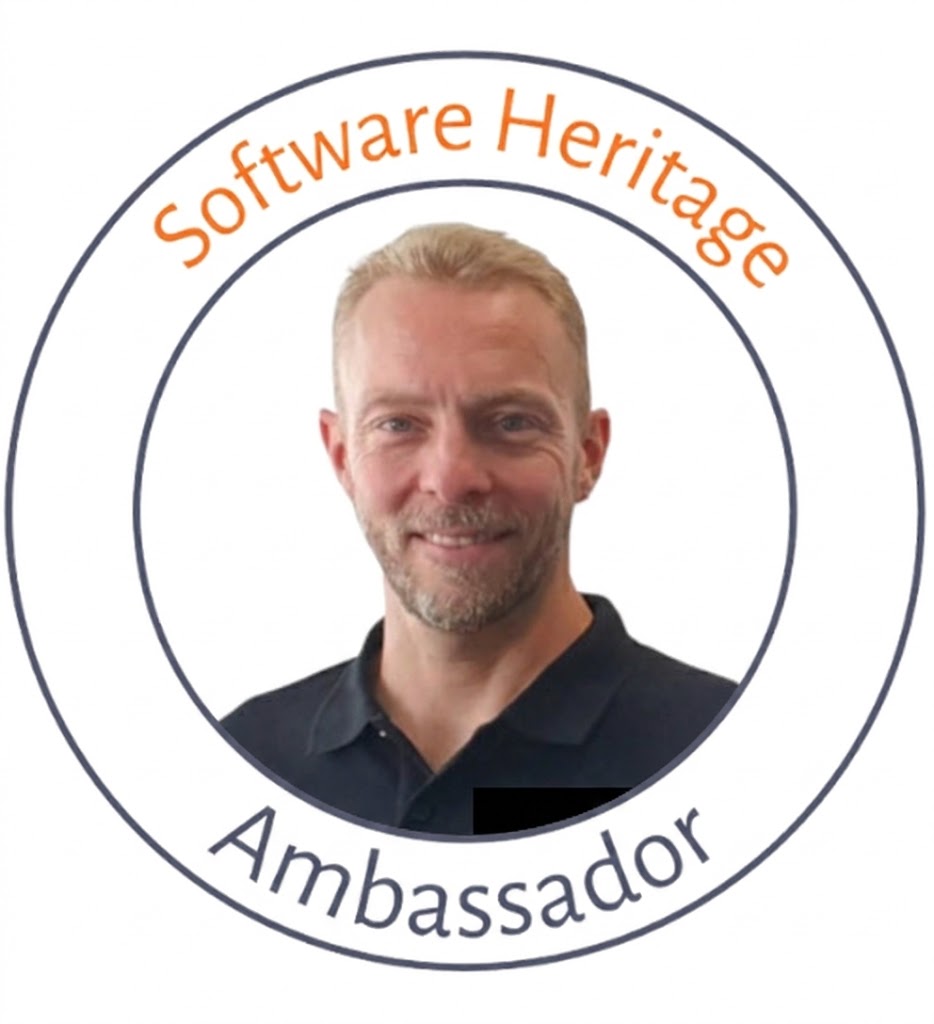
Chauvet’s career path is a testament to that principle. This commitment to the « long view » led him to join Software Heritage in 2022 as an engineering manager. He describes his time there as « there and back again, » a period where he helped a modest team of just 12 people scale a technical roadmap that felt impossibly vast. He was struck by the efficiency of the organization: building a globally significant archive and the SWHID standard from a custom-built infrastructure while simultaneously cultivating a vibrant community in open science and research. He didn’t just manage a team; he helped prepare the foundational « edges » of an Archive that now holds billions of files.
Bridging industry and Archive
Benoit’s career path is a testament to that principle. This commitment to the « long view » led him to join Software Heritage in 2022 as an engineering manager.
He describes his time there as « there and back again, » a period where he helped a modest team of just 12 people scale a technical roadmap that felt impossibly vast. He was struck by the efficiency of the organization: building a globally significant archive and the SWHID standard from a custom-built infrastructure while simultaneously cultivating a vibrant community in open science and research. He didn’t just manage a team; he helped prepare the foundational « edges » of an Archive that now holds billions of files.
Now, as a Software Heritage Ambassador, Benoit hopes to bridge these two worlds. He‘s already identifying the key allies and technical frameworks that will turn this vision into a standard. Through the CodeCommons project, he’s been working to aggregate the qualified data needed to build smaller, better datasets for AI. At the same time, the OSPO-Radar platform aims to map and reveal isolated research code that might otherwise be lost.
At the heart of this industrial shift is the SWHID ISO standard, which Benoit champions as the antidote to fragile dependencies. By ensuring code integrity and enabling enhanced attribution graphs, the SWHID allows developers to link source code back to its original authors and repositories—a foundational requirement for ethical AI training and license compliance. When paired with tools like the SWH Scanner, which allows companies to analyze their codebases against the archive’s massive index, the « invisible labor » of web stewardship finally becomes a measurable, verifiable reality. For the web’s sherpa, the mission remains clear: ensuring the path is open, the history is saved, and the tools for a trustworthy future are in everyone’s hands.
Software Heritage Ambassadors are volunteers who offer expert advice in various sectors and languages on how to use our services. Here’s more information on how to book one for a free consultation.
If you’d like to connect with Benoît Chauvet, you’ll find contact information on his Ambassador profile.
Would you like to get involved? We’re also seeking passionate individuals and organizations to volunteer as ambassadors and help grow the Software Heritage community. If you’re interested in becoming an Ambassador, please share a bit about yourself and your connection to the Software Heritage mission.