
Software Heritage expands mirror network to Spain
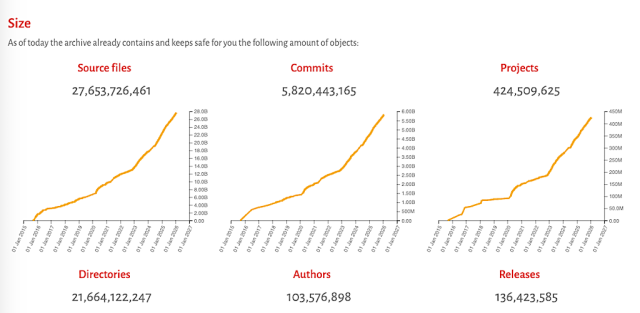
The Software Heritage archive is expanding its distributed infrastructure through a new agreement with IMDEA Software and INRIA. This initiative marks the establishment of the first mirror node in Spain for the Archive, which currently preserves more than 27.8 billion unique source files.
Context and regional support
The agreement was presented during the Software Heritage 10th Anniversary Symposium in Paris. In an unscripted moment—triggered by a shift in the event timeline—representatives from the project were invited to the stage by Software Heritage Director Roberto Di Cosmo for a series of off-the-cuff remarks.
Marina Villegas Gracia, Director General of Research and Technological Innovation Madrid Regional Government, provided context on the region’s broader scientific goals, noting that IMDEA Software serves as a flagship in a regional network designed to reach a 3 percent research investment goal by 2030. This infrastructure alignment supports the National Open Science Strategy, treating source code as a fundamental pillar of the scientific record alongside publications and data.
“The Madrid Regional Government is committed to building and funding the networks that support scientific excellence. IMDEA Software is a flagship of our regional research strategy,” stated Villegas.
Technical resilience and supply chain security
IMDEA Software Director Manuel Carro spoke extemporaneously on the necessity of the mirror. He emphasized that while the project was once considered a “nice-to-have,” it’s now a vital requirement for modern research, particularly regarding the software supply chain.
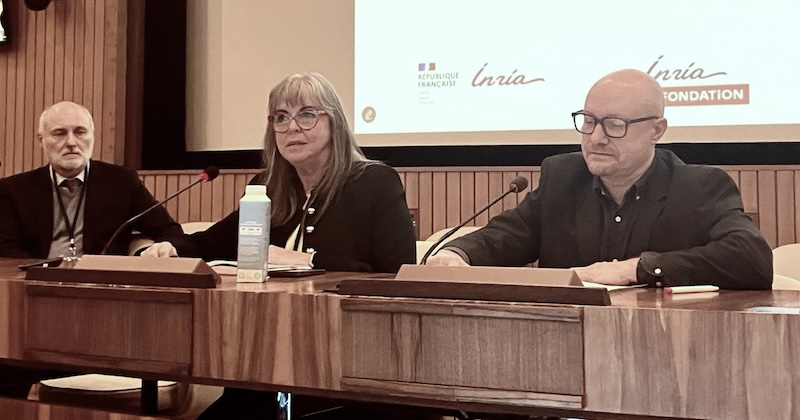
“Usually, people think that quality is better than quantity. But this is a case in which quantity certainly has an impact on quality,” Carro noted. “By having virtually all these software components in the world in one place, you can track dependencies and changes that were impossible to track if these components were living in separate silos.”
The planned mirror at IMDEA Software will provide a full, local replica of the global archive. These distributed nodes are designed to ensure data redundancy and load distribution, protecting the archive’s accessibility against technical, commercial, or geopolitical disruptions.
A commitment to Open Science
The initiative is positioned to support European Union priorities, specifically cyber-resilience and the application of FAIR principles to software. As Carro highlighted, the mirror is an act of reciprocity within the global community:
“Open source is not about getting things—it’s about giving back. Setting up this mirror is not something we want to use only internally for ourselves; we want to make it available for the rest of the software engineering and artificial intelligence communities as part of Open Science in its widest meaning.”
Towards a distributed, multistakeholder infrastructure
The establishment of the node in Spain is a critical step in Software Heritage’s mission to build an international network of mirrors. A mirror is more than a backup; it’s a complete, synchronized copy of the Archive operated by a partner institution. This multistakeholder approach decentralizes access and provides a massive, redundant fail-safe, ensuring the scientific record remains accessible regardless of technical, commercial, or geopolitical shifts.
By maintaining this local replica, IMDEA Software joins a growing global backbone of operational mirrors, including in Italy (ENEA) and Greece (GRNET), alongside a forthcoming node in Germany (UNIDUE). This distributed architecture protects humanity’s software heritage against any single point of failure.
The expansion into Spain serves as an invitation for further institutions worldwide to join the network, ensuring the long-term preservation of the global software commons. For more information on the technical requirements and how to join the Software Heritage Mirror Program, visit our dedicated page.
This project is partially funded under Grant CEX2024-001471-M by MICIU/AEI/10.13039/501100011033.