
Open infrastructures for software as a digital public good
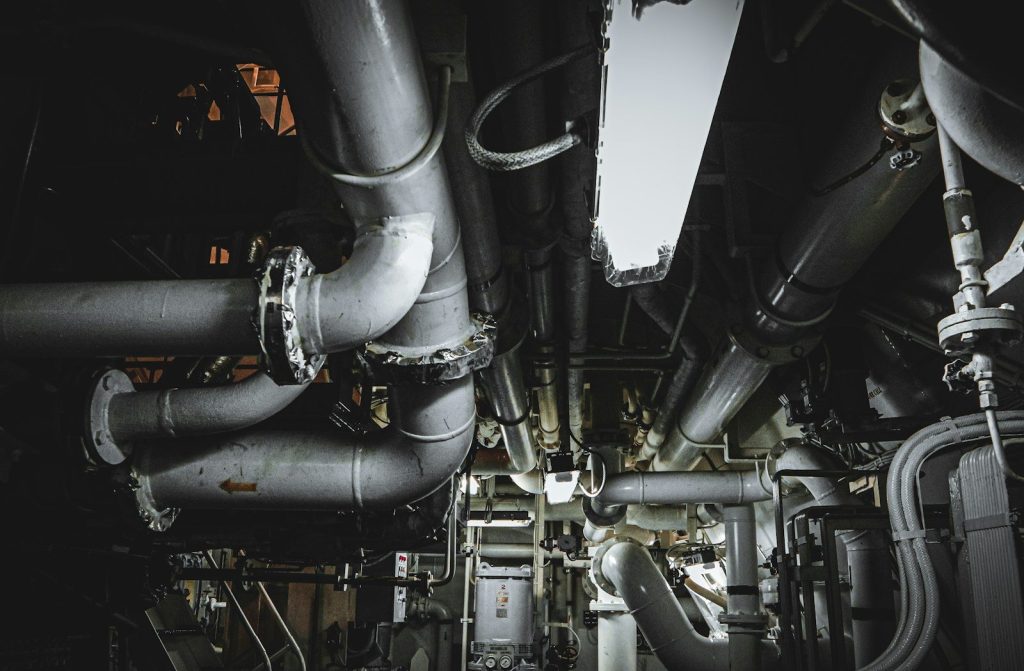
In the flashy world of AI and supercomputing, the infrastructure is often the part everyone ignores until it breaks. But at the Software Heritage 10th Anniversary Symposium at UNESCO, the “engine room” took center stage.
Moderator Peter O’Brien, technology correspondent at TV news channel France 24, opened the session by asking a fundamental question for our current era: “How do open infrastructures as a digital public good serve researchers, civil society, scientists, journalists, and educators?”
For Tanja Vos, a professor of software engineering, the answer begins with a practical concern: ensuring that the discipline used to build these infrastructures—software engineering—is not overlooked as it evolves to meet the demands of AI. You can watch the entire 40-minute session on YouTube.
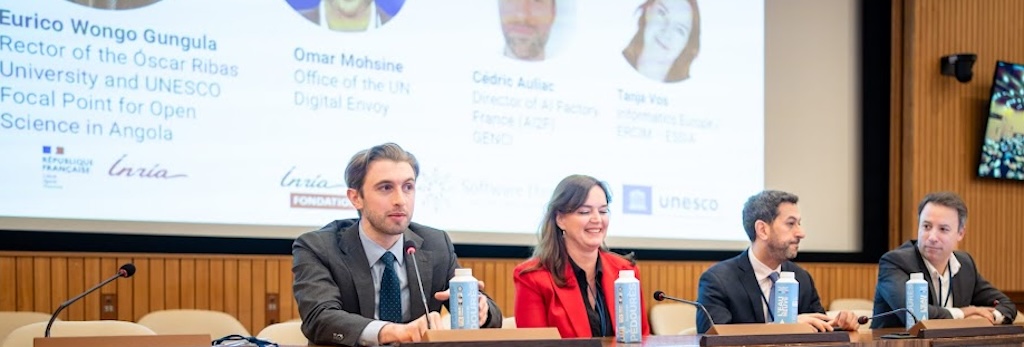
Not pictured: Eurico Wongo Gungula — via video
The engineering shift
Vos, representing Informatics Europe, notes that while software is the foundation of our digital society and archives like Software Heritage, there is a misconception that software engineering has already “solved all problems”. In reality, AI is transforming the way systems are built, moving toward a model where developers provide natural language specifications to Large Language Models (LLMs), which then generate the code. If the output doesn’t work as intended, the specification is rewritten, and the software is generated again from scratch. As Vos explains, this creates a specific challenge for digital preservation: because software may no longer be refactored but simply rebuilt, “every commit is a whole entire system,” leading to repositories that will grow at an incredibly fast rate.
The “dirty job” of sovereignty
Cédric Auliac, AI Program Director – AI Factory France Coordinator at France’s supercomputer GENCI, described the physical reality of preserving code as a “dirty job but someone has to do it.” The model employed there offers a glimpse into a sustainable public service: researchers get free, massive compute power, but “there’s a catch,” he notes, they must publish their results as open research. This policy is “directly connected to the mission of Software Heritage,” ensuring that the data sets used to train and test the next generation of AI are as accessible as the hardware they run on.
Ending the myth of “free” open source
From the UN’s perspective, the “superpower” of international cooperation is the ability to “convene” the global community to build “public goods for all of us.” However, Omar Mohsine of the UN Office of the Digital Envoy was blunt about the cost of transparency: we must “get out of the myth that open source is free.” It requires institutional funding and global coordination to move beyond “siloed” maintenance. Mohsine said he was”very honored” that Software Heritage is the latest organization to endorse the UN Open Source Principles, which mandate that technology be “open by default.”
A global legacy
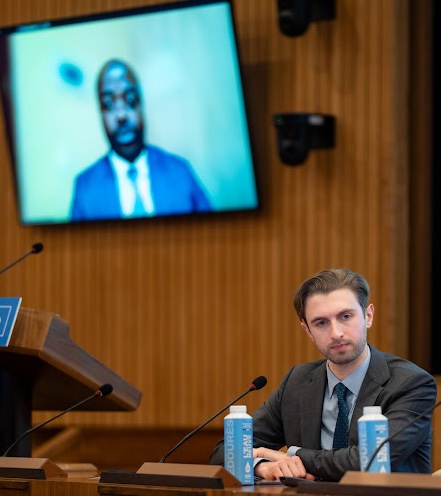
For Eurico Wongo Gungula, software is no longer a peripheral tool; it is a “critical global infrastructure” that serves as the foundation for national knowledge circulation and informed policymaking. He detailed Angola’s strategic pivot over the last five years toward a model where software is treated as a sustainable public good. Central to this effort is the recently launched National Repository for Open Science, a technical backbone designed to ensure that research and data remain accessible rather than locked behind proprietary paywalls. By constructing national repositories that align with mission of Software Heritage, nations are working to ensure that technology is driven by the public interest rather than commercial profit. For emerging economies like Angola, this isn’t just a technical discussion—it’s about equitable knowledge. By constructing national repositories, nations are ensuring they have the “evidence-informed policy making” tools needed to remain sovereign in a digital age.
In a world where AI is rapidly rewriting the rules of creation, these open infrastructures are helping to keep the digital record transparent and reliable.
Catch all the sessions from the Symposium on YouTube.
#SWH10