
Archiving 900 million lines of the OIN Linux System Table
Software code is the backbone of modern innovation, but code that isn’t preserved is code that can be lost—or worse, weaponized. At Software Heritage, we’ve spent a decade building the universal library of source code, and we’ve had the Open Invention Network (OIN) as a dedicated ally and supporter since our early days.
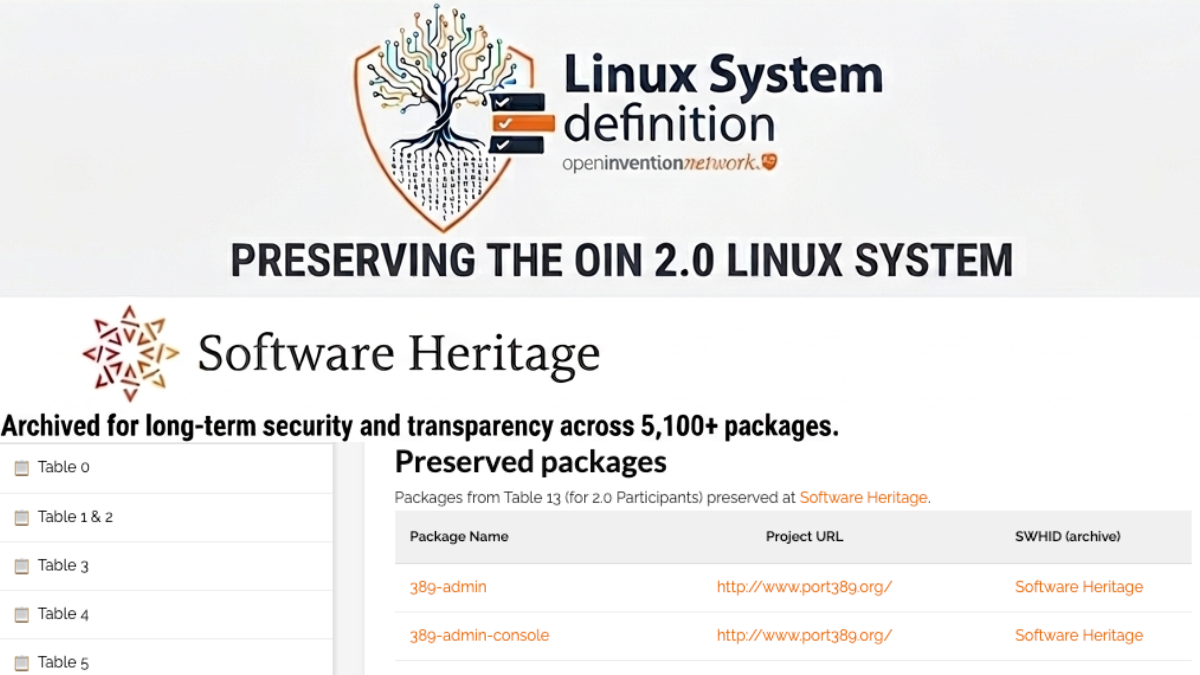
For the uninitiated, Table 13 isn’t just a list; it defines the scope of the patent cross-license that protects the global open-source ecosystem. Linux System Table 13 in OIN 2.0 enumerates the open-source packages, interfaces, APIs, protocols, and file formats whose implementations are covered by the mutual patent license — i.e., members agree not to assert patent claims that read on Linux and other open source software listed. By archiving these 900 million lines of code, we are ensuring that the technical and legal foundations of the “software commons” are preserved for the long haul.
Why this matters for users and developers
In the fast-moving world of open source, link rot and repository shutdowns are constant threats. When code disappears from the internet, it creates gaps in our collective history and vulnerabilities in our legal defense.
“Open source software stands as one of the most powerful catalysts for innovation in the modern era. It has changed the landscape, ushering in new industries, products, and services,” notes Keith Bergelt, OIN CEO. “When code is carefully archived and preserved, it safeguards not just the software itself, but the technical innovation it embodies. Archiving code protects the foundation of human ingenuity on which future code rests, while transforming the archive into a powerful source of prior art that will soon be used to enable more effective patent examination and permit invalidation of poor quality patents that would not have been granted had this source of prior art been made accessible to prior generations of patent examiners.” For more details on the scope of the rollout, you can read the official announcement from our partners at OIN here.
By pairing OIN’s patent non-aggression framework with our durable preservation, we’re providing:
- Prior art support: The Archive provides verifiable, timestamped source code. This is critical for invalidating poor-quality patents and raising the bar for what can be patented in the future.
- Transparency: Developers and enterprises can now precisely identify and audit the code covered under the OIN license. No more guessing games or “ghost” dependencies.
- Traceability: Even as OIN 2.0 expands to Table 14 and beyond, every accepted package will be systematically archived.
Securing the future of innovation
As the largest active patent cross-license in history, OIN understands that protecting code requires more than just a legal agreement—it requires a permanent record. In Bergelt’s words, a uniform database of code is the “critical first step” for understanding the scope of innovation and documenting the inventions arising from the cultural phenomenon of open-source development.
This milestone is about more than just backups; it’s about trust. Working with OIN, Software Heritage ensures this technical and scientific knowledge stays openly accessible to the community.
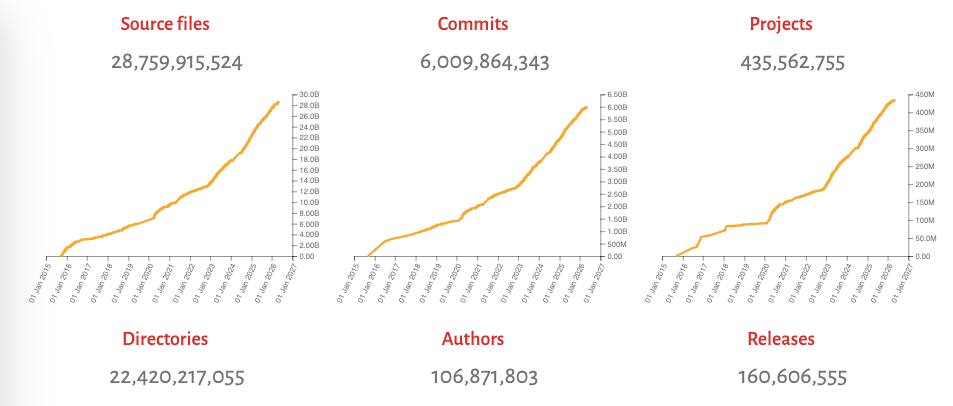
The Archive has already safeguarded over 28 billion unique source files, and with supporters like OIN, innovation won’t be lost to a broken link.
Everyone’s code belongs in the Archive. Take a moment to save your code and generate your own SoftWare Hash IDentifier (SWHID). It’s more than a link; it’s a permanent fingerprint for your contribution to the software commons.